
Worried about what happens when you stop using Rogaine? If you’ve been applying minoxidil for months or years and are considering quitting due to cost, side effects, or convenience, it’s important to know exactly what to expect.
In this guide, you’ll learn the typical timeline after stopping, why hair loss returns, how to minimize shedding, and what alternatives may help you maintain your results. Backed by medical insights and real-user experiences, this article will help you make an informed and confident decision.
How Rogaine Works & Why It Matters
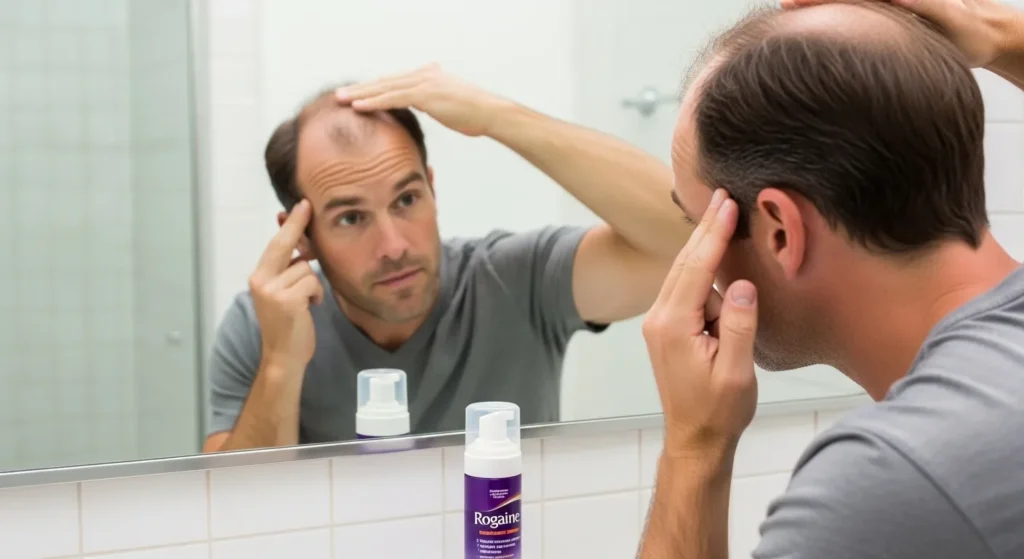
Rogaine (brand name for minoxidil) is a topical hair loss treatment approved by the U.S. FDA for both men and women. It’s most effective for androgenetic alopecia (pattern hair loss) and some cases of thinning.
Mechanism of Action
- Increases blood flow to the scalp, improving follicle nutrition.
- Prolongs the anagen phase (growth stage) of the hair cycle.
- Revives miniaturized follicles so they can produce thicker strands.
Why Continuous Use Is Essential
Unlike a permanent hair transplant, Rogaine works only while it’s being used. Once stopped, the stimulation effect ends, and follicles revert to their natural state. This is why consistent application is key for long-term results.
What Happens When You Stop Using Rogaine? (Timeline)
Stopping Rogaine doesn’t cause “rebound hair loss” beyond your original condition, but you will lose the hair it helped you keep or regrow. Here’s what typically happens:
Weeks 0–4: No Major Visible Changes
- Internally, follicles begin returning to their pre-treatment growth cycles.
- Most people don’t notice significant shedding yet.
- Some may feel slight scalp changes (e.g., dryness) after discontinuation.
Months 1–3: Noticeable Shedding
- Hairs that were supported by minoxidil start entering the telogen (resting) phase.
- Increased hair fall becomes visible in the shower or on pillows.
- Thinning areas start reappearing.
Months 3–6: Loss of Regrown Hair
- The regrowth achieved with Rogaine is shed.
- Hair density returns to baseline levels before you started treatment.
- In some cases, pattern baldness may seem more noticeable, mainly because you have gotten used to fuller hair.
Beyond 6 Months: Natural Progression of Hair Loss
- Without another treatment, hair loss continues at its natural genetic rate.
- For those with aggressive male or female pattern baldness, thinning may accelerate over the years.
Why This Happens
The effect of Rogaine is pharmacological, not curative. Once the drug is withdrawn:
- Follicles no longer receive the enhanced blood supply and growth signals.
- The natural miniaturization process in pattern baldness resumes.
- There is no permanent structural change to follicles—only ongoing stimulation while using the treatment.
Myth Busting: Stopping Rogaine doesn’t cause your hair to fall out faster than your genetic pattern dictates—it simply removes the extra support, revealing your underlying hair loss.
How to Stop Rogaine Safely (Minimize Shedding Risk)
If you’ve decided to discontinue, consider a tapering approach rather than stopping abruptly.
Step-by-Step Taper Plan
- Reduce frequency — from twice daily to once daily for 4–6 weeks.
- Alternate days for another month.
- Stop completely once alternative treatments (if chosen) are established.
Overlap Method
- Start another clinically proven treatment (like finasteride for men) before tapering off Rogaine.
- This can help preserve hair density during the transition.
Professional Monitoring
- Always consult a dermatologist or hair specialist before making changes.
- Regular scalp photos can help track changes objectively.
Alternatives & Next Steps
If you’re stopping Rogaine, consider switching to or combining with other solutions:
Finasteride (Oral or Topical)
- Blocks DHT, the hormone responsible for follicle shrinkage.
- Suitable for most men; less commonly prescribed for women.
Low-Level Laser Therapy (LLLT)
- Stimulates follicles with red light therapy.
- Non-invasive, at-home devices are available.
Natural Supportive Measures
- Rosemary oil (some evidence for growth stimulation).
- Saw palmetto supplements (mild DHT-blocking effect).
- Balanced nutrition: Ensure adequate protein, iron, and vitamin D.

FAQs
Will stopping Rogaine make my hair loss worse than before?
How soon will shedding begin after stopping?
Can I regain lost hair after stopping?
Is lifelong use necessary?
Does tapering reduce shedding?
Next Steps
If you’re considering stopping Rogaine, don’t go through it blindly. The right transition plan can make all the difference in maintaining your hair. Book a consultation with Dr. Rana Irfan in Islamabad today for personalized, medically backed guidance on safe discontinuation and effective alternatives.