
Summary
Topical latanoprost for hair loss has emerged as a promising treatment, particularly for androgenetic alopecia. Activating prostaglandin receptors in hair follicles helps prolong the hair growth phase.
While clinical studies show positive results, it’s important to consult a healthcare provider before use. Combining topical latanoprost with other treatments like minoxidil may enhance hair regrowth results.
Introduction
Hair loss can be a challenging and emotionally draining experience, especially when traditional treatments fail to provide lasting results. Topical latanoprost, initially developed for glaucoma, has emerged as a potential treatment for hair loss, showing promise in clinical studies.
In this article, we’ll explore how latanoprost works, its potential benefits for hair regrowth, and how it compares to other treatments. By the end, you’ll understand whether this option could be right for you, backed by scientific evidence and expert insight.
What Is Topical Latanoprost?
Origins and Medical Uses
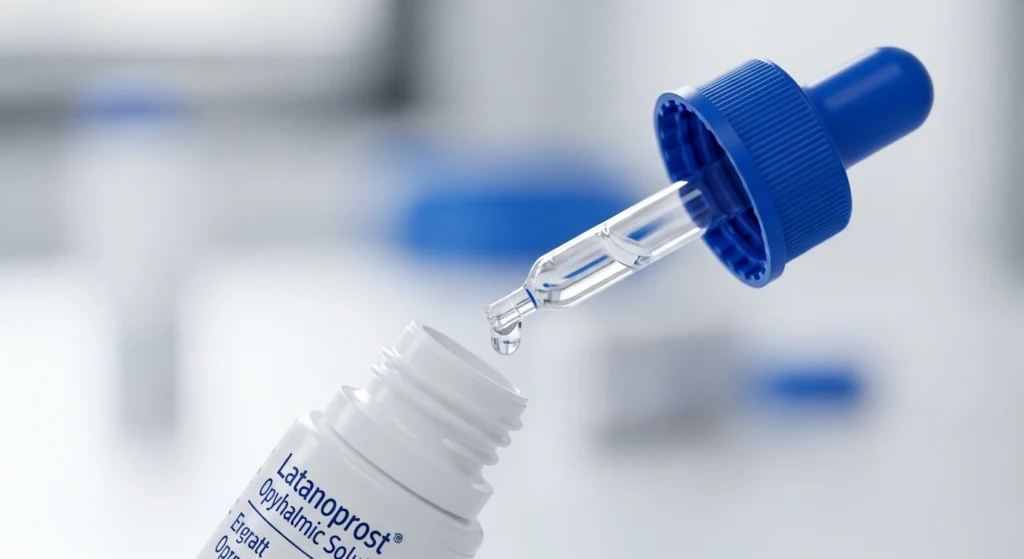
Topical latanoprost is a medication originally designed to treat glaucoma, a condition that increases pressure in the eyes. Latanoprost is a synthetic prostaglandin F2α analog, which helps reduce eye pressure by improving the drainage of fluid within the eye. However, what makes latanoprost particularly interesting in the context of hair loss is its unexpected side effect: eyelash growth.
Transition to Hair Loss Treatment
As researchers noticed that latanoprost enhanced eyelash growth in glaucoma patients, they began to investigate its potential to stimulate hair regrowth on the scalp. Early studies showed positive results, leading to increased interest in its off-label use as a treatment for androgenetic alopecia (male and female pattern baldness).
How Does Latanoprost Promote Hair Growth?
Prostaglandin F Receptor Activation
Latanoprost works by activating the prostaglandin F (FP) receptors in hair follicles. These receptors are involved in hair follicle cycling, particularly in the growth phase (anagen). By stimulating these receptors, latanoprost promotes the prolongation of the anagen phase, leading to thicker and denser hair. This mechanism makes latanoprost a promising alternative to more commonly used treatments like minoxidil.
Clinical Studies and Results
Androgenetic Alopecia (Male Pattern Baldness)
Research on topical latanoprost for androgenetic alopecia has yielded promising results. In clinical trials, patients who applied latanoprost twice daily saw significant improvements in hair density. One study found a 22% increase in scalp hair density over the course of 24 weeks. Although more studies are needed, these findings suggest that latanoprost could be a viable option for individuals struggling with male pattern baldness.
Combination Treatments
Interestingly, latanoprost may work even better when combined with other treatments like minoxidil. A combination therapy can leverage the complementary mechanisms of both drugs—while latanoprost extends the hair growth phase, minoxidil stimulates hair follicles to grow new hair. Clinical studies have shown that using latanoprost and minoxidil together often leads to faster and more robust results than using either treatment alone.
Alopecia Areata
While latanoprost has shown great promise in treating androgenetic alopecia, its effectiveness in treating alopecia areata (an autoimmune form of hair loss) is less clear. Research has indicated mixed results, with some studies showing mild improvements, while others found little to no effect. In cases of alopecia areata, corticosteroid treatments may remain the most effective option.
Safety and Side Effects
Common Side Effects
Topical latanoprost is generally well-tolerated, but like any medication, it can cause side effects. The most common side effects include:
- Scalp irritation or redness
- Itching or burning at the application site
- Dryness or flaking of the scalp
These side effects are typically mild and go away on their own after a short period of use. However, if they persist or become bothersome, you should consult with your doctor.
Long-Term Risks
There are some concerns about the long-term use of latanoprost, especially with prolonged exposure to the eyes. In rare cases, the medication has been linked to pigmentation changes in the iris (the colored part of the eye), especially in individuals who use it for extended periods. However, this side effect is not typically seen when the medication is used topically on the scalp.
Comparison with Other Treatments
Compared to other hair loss treatments like finasteride and minoxidil, latanoprost generally has a more favorable side effect profile. Minoxidil can cause significant scalp irritation and unwanted hair growth in areas like the forehead, while finasteride has been associated with sexual side effects. Latanoprost’s side effects are generally mild and localized to the scalp.
How to Use Topical Latanoprost for Hair Loss
Recommended Dosage
The recommended concentration of topical latanoprost for hair loss is typically 0.005% to 0.01%. You should apply the medication once daily, typically in the evening, to the affected areas of the scalp. Make sure to use clean hands or an applicator to avoid contamination.
Application Tips
- Clean your scalp thoroughly before application.
- Use a few drops of the solution on the affected areas and gently massage it in.
- Avoid applying too much product; a little goes a long way.
- Wash your hands thoroughly after application.
Combining with Other Treatments
While latanoprost can be effective on its own, combining it with other treatments like minoxidil can often lead to better results. Minoxidil helps stimulate hair growth, while latanoprost ensures the hair stays in the growth phase for a longer period.
Who Should Consider This Treatment?
Ideal Candidates
Topical latanoprost is best suited for individuals with androgenetic alopecia who have not responded to other treatments. It may also benefit people who are looking for a non-invasive, topical treatment for hair loss. If you have alopecia areata or other forms of hair loss, it’s essential to consult a doctor to determine whether latanoprost is right for you.
Considerations Before Use
Before starting any new treatment for hair loss, consult with a healthcare provider. Your doctor can help assess whether latanoprost is suitable for your specific condition and guide you on how to use it effectively. If you experience any persistent side effects, discontinue use and consult your doctor.
Alternative Treatments for Hair Loss
Minoxidil
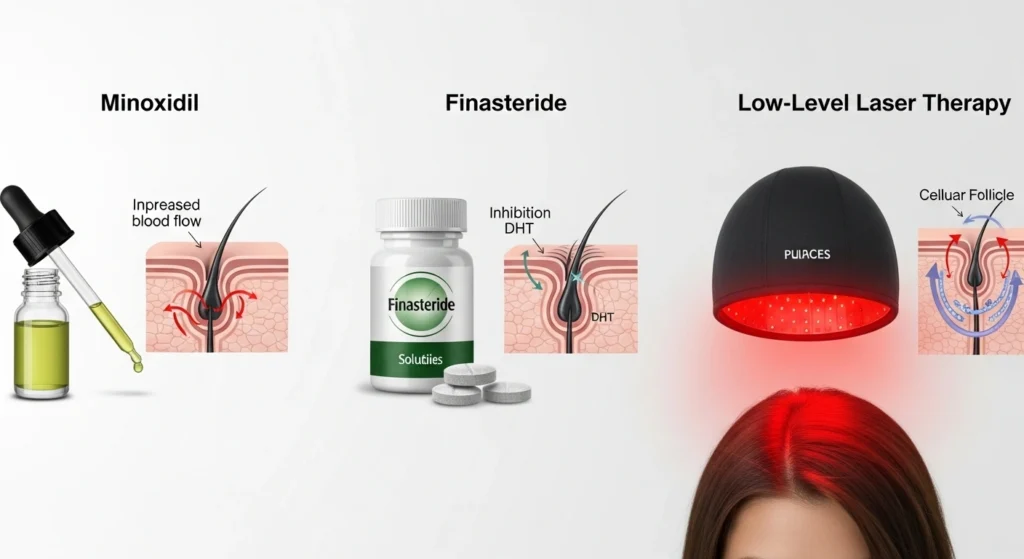
Minoxidil is one of the most widely used treatments for hair loss. Available over-the-counter, it’s applied topically to the scalp and helps stimulate hair growth by improving blood flow to the hair follicles. However, it can cause scalp irritation in some people.
Finasteride
Finasteride is an oral medication that works by inhibiting the hormone dihydrotestosterone (DHT), which plays a role in hair loss. However, it is associated with potential sexual side effects, such as decreased libido and erectile dysfunction.
Low-Level Laser Therapy
Low-level laser therapy (LLLT) uses red light to stimulate hair follicles and promote growth. It is non-invasive and is effective for some individuals, though results vary.
FAQs
Can latanoprost be used for female pattern hair loss?
How long does it take to see results?
Is latanoprost FDA-approved for hair loss?
Conclusion
Topical latanoprost offers a promising alternative for treating hair loss, especially for individuals with androgenetic alopecia. While it is not without its risks, its efficacy and side effect profile make it an appealing option for many. As with any hair loss treatment, it’s important to consult a healthcare provider to ensure it’s right for your specific needs.
If you’re considering topical latanoprost for hair loss, schedule a consultation with a dermatologist to discuss whether this treatment is right for you. A healthcare professional can guide you through the process and help monitor your progress for optimal results. Book a consultation today to take the first step toward regrowing your hair.