
Summary
Does Pregnenolone Cause Hair Loss? Pregnenolone is a hormone precursor that may cause hair loss in some people due to its conversion into DHT, a hormone linked with thinning hair.
While not everyone is affected, those with genetic sensitivity or higher doses face a greater risk. Shedding is often temporary and may reverse once supplementation stops or is adjusted.
Consulting a specialist and monitoring hormones is the safest way to prevent or manage hair loss concerns.
Introduction
If you’re considering hormone supplements, you may be wondering: Does pregnenolone cause hair loss? Pregnenolone is a natural hormone precursor with benefits for memory, mood, and energy, but some users worry it may trigger hair shedding.
This article explains how pregnenolone works, whether it can affect your hair, who is most at risk, and what you can do to protect your scalp health. By the end, you’ll know what science and medical experts say so you can make an informed decision.
What is Pregnenolone & How It Works in the Body
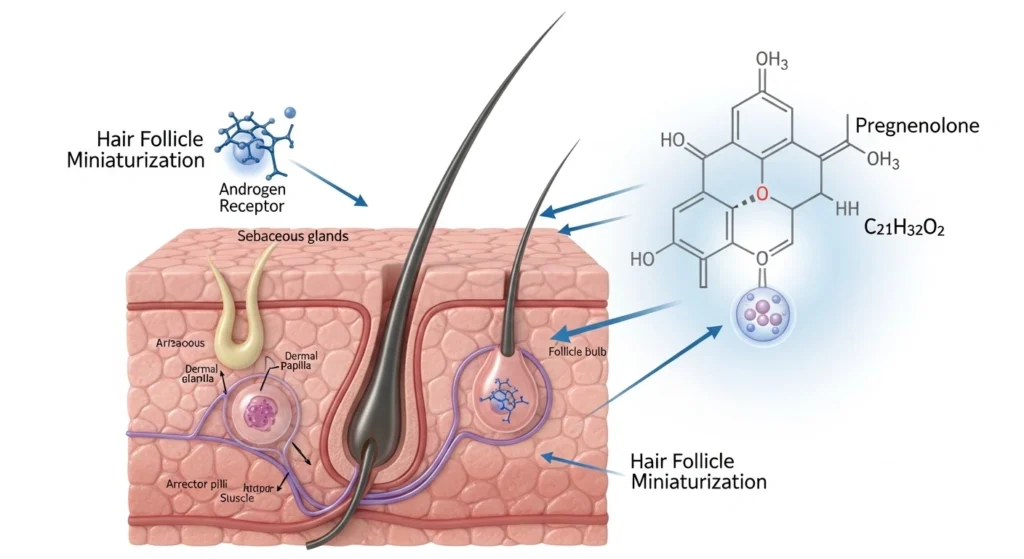
Pregnenolone is a precursor steroid hormone, often called the “mother hormone” because it helps produce many other hormones in your body.
It’s primarily made in the adrenal glands, brain, and gonads. From there, it can convert into hormones like DHEA, testosterone, estrogen, and progesterone.
Biochemistry of Pregnenolone
At its core, pregnenolone comes from cholesterol. Enzymes like CYP17 and 3β-HSD guide their conversion into other steroid hormones that influence metabolism, mood, and hair growth.
Hormonal Pathways
- Pregnenolone → DHEA → Testosterone → DHT (a potent androgen linked with male pattern baldness).
- Pregnenolone → Progesterone → Cortisol or Estrogens (affecting stress and reproductive balance).
Because it sits at the top of these pathways, small changes in pregnenolone levels may alter multiple hormones that influence hair health.
Evidence on Pregnenolone and Hair Loss
Reported Side Effects
Medical sources such as WebMD and RxList list hair loss among potential side effects of pregnenolone supplements. However, published studies are limited, and evidence is mostly from clinical observations and user reports.
Case Reports & Experiences
Some users taking pregnenolone for fatigue, memory, or hormone support report increased hair shedding. These cases suggest sensitivity to androgen pathways, but not everyone experiences this side effect.
Research Limitations
Currently, there are no large randomized trials directly linking pregnenolone to hair loss. Most findings come from its hormonal conversions and similarities with other androgen-related pathways.
How Pregnenolone Could Cause Hair Loss (Mechanisms)
Androgen Pathway
Pregnenolone can indirectly increase DHEA and testosterone, which may raise levels of dihydrotestosterone (DHT). High DHT is known to shrink hair follicles in those predisposed to androgenic alopecia.
Hormone Sensitivity
People with strong androgen receptor activity in scalp follicles may react more strongly, leading to visible thinning even at normal hormone levels.
Hormonal Imbalance
Too much pregnenolone may tilt the balance toward androgens and away from protective estrogens or progesterone, disrupting hair cycles.
Overdose & Duration
High doses or long-term use increase the likelihood of hormonal side effects, including hair shedding.
Risk Factors – Who Is More Susceptible
Genetic Predisposition
If you have a family history of androgenic alopecia, you’re more likely to notice hair loss from pregnenolone’s hormonal effects.
Gender & Age
- Men: More likely to experience androgen-driven thinning.
- Women: May be sensitive during menopause or with conditions like PCOS.
Dosage & Formulation
High-dose oral supplements carry a greater risk compared to low-dose or topical pregnenolone.
Other Contributing Factors
Stress, nutritional deficiencies, thyroid issues, or poor scalp health may amplify hair shedding while on pregnenolone.
How Often Does Hair Loss Happen — Frequency & Timeline
Onset
Reports suggest hair shedding can begin within weeks to months after starting pregnenolone, depending on dosage and sensitivity.
Dose-Response
The higher the dose, the stronger the chance of tipping hormonal balance toward DHT.
Temporary or Permanent?
In many cases, shedding is temporary (telogen effluvium) and improves after adjusting or stopping pregnenolone. But in genetically predisposed individuals, it may accelerate pattern hair loss.
Is the Hair Loss Reversible? Recovery & Mitigation Strategies
Stopping or Adjusting Dose
Hair often improves when the supplement is reduced or discontinued. Always taper under medical supervision.
Medical Treatments
Dermatologists may recommend:
- 5α-reductase inhibitors (e.g., finasteride) to block DHT.
- Topical minoxidil to encourage regrowth.
Lifestyle & Nutrition
- Prioritize protein, zinc, vitamin D, and omega-3s.
- Reduce stress through sleep and mindfulness.
- Maintain scalp hygiene.

Safe Usage
Always monitor hormone levels with blood tests and work with an experienced endocrinologist.
FAQs — Common Questions About Pregnenolone & Hair Loss
Does pregnenolone cause hair loss in everyone?
Can low doses cause shedding?
How long until hair returns after stopping?
Is the effect different for men and women?
Are topical forms safer than oral?
Next Step
If you’re experiencing unexpected shedding while taking pregnenolone, don’t wait. Book a consultation with Dr. Rana Irfan in Islamabad today to evaluate your hormone levels, review your supplement plan, and protect your long-term hair health.