
Summary
Can lung cancer cause hair loss? While the disease itself rarely does, treatments like chemotherapy and radiation are the main causes.
Hair usually starts shedding within weeks of therapy but regrows after treatment, often with changes in texture or color. Supportive care, cold caps, and expert guidance can help patients cope and recover.
Introduction
Are you worried that your diagnosis of lung cancer might cause hair loss? While many people ask, “can lung cancer cause hair loss?”,
The reality is that most cases of hair shedding in lung cancer patients are linked to treatments like chemotherapy and radiation, not the disease itself.
In this article, you’ll learn what really causes hair loss, when it may occur, strategies to cope, and expert-backed insights on regrowth and recovery.
Can Lung Cancer in Itself Cause Hair Loss?
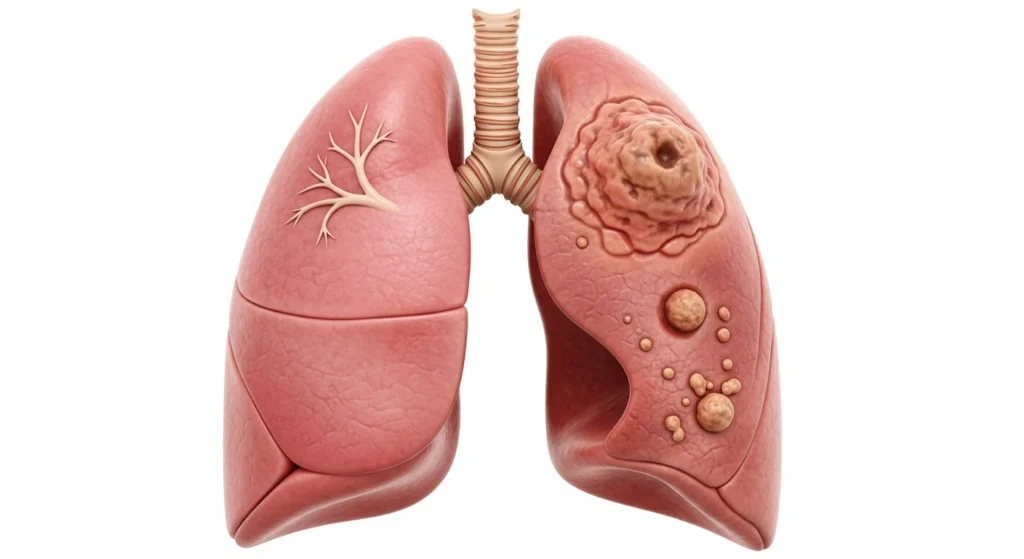
Most patients experience hair loss because of treatment side effects, not the cancer itself. Lung cancer cells don’t directly attack hair follicles. However, there are some exceptions worth noting:
The Usual Cause: Treatment Side Effects, Not Cancer Per Se
Chemotherapy and radiation target fast-dividing cells. Unfortunately, this includes hair follicles, which is why shedding is so common during therapy.
Rare Exceptions: Alopecia Neoplastica
In extremely rare cases, lung cancer can spread to the scalp, a condition known as alopecia neoplastica. Here, metastasis damages the scalp and directly causes patchy, scarring hair loss. [Medical Reviewer Note Needed Here]
When to Suspect Direct Involvement
If hair loss is patchy, painful, or accompanied by skin changes on the scalp, it’s important to consult a dermatologist and oncologist immediately.
Expert Insight
According to oncologists and dermatologists, unexplained hair loss in cancer patients should always be investigated to rule out rare but serious conditions.
Why Do Lung Cancer Treatments Lead to Hair Loss?
Chemotherapy-Induced Hair Loss
Chemotherapy drugs are designed to stop cancer growth by destroying rapidly dividing cells. Hair follicles, which grow quickly, are unintentionally damaged, leading to sudden shedding (anagen effluvium). Drugs like cisplatin and etoposide are well known to cause this effect.
Radiation Therapy and Localized Alopecia
If radiation is directed near the head or brain to treat metastasis, hair loss can occur in the irradiated area. Unlike chemo, this is localized rather than widespread.
Immunotherapy and Targeted Therapy
Newer treatments like immunotherapy (e.g., checkpoint inhibitors) or targeted therapies (e.g., EGFR inhibitors) generally don’t cause complete hair loss but may lead to thinning or texture changes.
Anagen Effluvium vs. Telogen Effluvium
- Anagen effluvium: sudden, dramatic loss during chemo.
- Telogen effluvium: stress-induced shedding, often reversible.
Understanding these helps doctors differentiate treatment-related vs. stress-related hair loss.
Timeline: When Does Hair Fall Out & Regrow?
Onset
Hair usually begins falling out 2–4 weeks after starting chemotherapy.
Duration
Shedding continues for the duration of therapy, sometimes until a few weeks after treatment ends.
Regrowth
Most patients see regrowth within 1–3 months after finishing treatment. However, hair may initially grow back thinner, curlier, or with a different color.
Rare Cases of Permanent Loss
Permanent thinning can occur after high-dose chemo or scalp radiation.
How Hair Loss Impacts Patients — Physically & Emotionally
Hair loss is more than a cosmetic issue.
- Appearance changes: sudden baldness or loss of eyebrows/lashes alter how patients look.
- Psychological impact: loss of hair can trigger depression, anxiety, or reduced self-esteem.
- Patient experiences: Many describe hair loss as a constant reminder of illness, making emotional recovery harder.
- Support systems: Counseling, oncology social workers, and support groups can play a vital role in coping.
Practical Strategies to Manage & Minimize Hair Loss
Scalp Cooling (Cold Caps)
Cold caps reduce blood flow to the scalp during chemo, lowering drug absorption and helping preserve hair. Effectiveness varies, and they are not suitable for everyone.
Preemptive Haircut or Trimming
Some patients find that cutting their hair short before treatment makes shedding less traumatic.
Gentle Hair Care Tips
- Use mild shampoos.
- Avoid heat styling, harsh dyes, or tight hairstyles.
- Pat dry instead of rubbing with a towel.
Wigs, Scarves, and Turbans
Modern wigs and headwear offer both style and comfort. Insurance may cover the cost if prescribed as a “cranial prosthesis.”
Scalp Care
Keep the scalp moisturized and protected from the sun. A sensitive scalp is prone to irritation.
Professional Support
Consulting a trichologist or dermatologist can help manage scalp health during and after treatment.
When to Seek Expert Help / Consultation
- Red flags: painful scalp, scarring, or uneven patchy loss.
- Dermatology + oncology care: collaboration between specialists can identify underlying causes and treatment options.
- Questions to ask your oncologist:
- What type of hair loss should I expect with my treatment?
- Will it grow back, and how soon?
- Are preventive strategies (like cold caps) right for me?
FAQs About Lung Cancer & Hair Loss
Will all lung cancer patients lose their hair?
Is hair loss permanent?
Can hair loss affect the entire body?
Can hair loss be prevented completely?
When should I see a doctor about hair loss?
Next Steps
Hair loss during lung cancer treatment is challenging, but with the right strategies, support, and expert care, recovery is possible. If you or a loved one is experiencing treatment-related hair loss, don’t face it alone.
Book a consultation with Dr. Rana Irfan in Islamabad today to receive expert guidance on managing hair loss, protecting scalp health, and planning for regrowth during and after treatment.